Do Rice Cookers Use a Lot of Electricity?
Usually, no: a rice cooker uses a modest amount of electricity for one batch, though the total depends on its wattage and how long it cooks or stays warm. Check the wattage label and use your electricity rate to estimate the cost.
On this page (8 sections)
- Do rice cookers use a lot of electricity?
- How can you estimate a rice cooker’s energy use?
- Does keep-warm use more electricity over time?
- Does a rice cooker’s wattage tell you how much it costs?
- Does cooking time change the electricity used?
- Do different types of rice cookers use different amounts?
- How can you keep rice cooker electricity use low?
- So, do rice cookers use a lot of electricity?
Rice cookers usually use a modest amount of electricity for one batch, but the total depends on wattage, cooking time, and how long you leave the cooker on keep-warm. Check the wattage label, then estimate energy in kilowatt-hours before comparing your home’s electricity rate.
A wattage number describes power, not the full cost of a meal. The cooker’s heater may cycle during cooking, so a simple estimate based on rated wattage is a useful ceiling when it runs below full power for part of the time.
Do rice cookers use a lot of electricity?
Usually, one cooking cycle uses less electricity than leaving a large appliance running for hours. The amount varies with the cooker’s wattage and the length of the cycle.
To estimate energy use, convert watts to kilowatts by dividing by 1,000. Multiply that figure by the number of hours the cooker draws power:
Energy in kilowatt-hours = watts ÷ 1,000 × hours
For example, a 450-watt cooker running at full power for one hour would use 0.45 kilowatt-hours. A cooking cycle may use less than that if the heater doesn’t draw full power for the whole hour.
To estimate cost, multiply kilowatt-hours by your electricity rate. Your bill or utility account should show the rate, which may vary by plan or time of day.
How can you estimate a rice cooker’s energy use?
Use the wattage on the appliance label and the time you actually use it for a rough estimate. The result is most useful for comparing your own habits, such as one batch versus several hours of keep-warm.
Try this three-step estimate:
- Find the wattage on the cooker or in its manual.
- Convert the wattage to kilowatts by dividing by 1,000.
- Multiply by the hours of operation, then multiply by your electricity rate for an estimated cost.
A cooker rated at 450 watts would use up to 0.45 kilowatt-hours in an hour at full power. If the heater cycles on and off, actual use during that hour can be lower.
For a more precise measure, use a plug-in energy monitor that is rated for the cooker’s electrical load and follow its instructions. Keep cords and connections dry, and don’t use a monitor if the appliance or manual says not to.
Does keep-warm use more electricity over time?
Yes, keep-warm adds electricity use for as long as the function stays on. The amount depends on the cooker’s design and how often its heater runs to maintain temperature.
If you’re keeping rice warm for a short time, the extra use may be small. For longer holds, think about whether you need the cooker running continuously, and switch it off once you no longer need warm rice.
Food safety matters too. Follow your cooker’s manual for safe holding and serving.
Don’t assume a rice cooker can keep rice warm indefinitely. Our guide to how long rice can sit on keep-warm covers the timing question.
Does a rice cooker’s wattage tell you how much it costs?
Wattage helps estimate energy use, but it doesn’t give the cost on its own. You also need the time the cooker runs and your electricity rate.
The three small cookers below have rated wattages from 450 to 460 watts. Those ratings help you make a rough comparison, but they don’t establish how much energy a batch uses in practice.
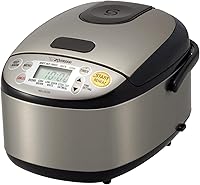
The Zojirushi NS-LGC05 has a 3-cup capacity and settings for white rice, long-grain white rice, brown rice, and steel-cut oatmeal. Its rated power is 450 watts.
The Toshiba Mini is rated at 460 watts. It has a 3-cup uncooked capacity, multiple cooking functions, and an auto keep-warm function.
The Amazon Basics 3-Cup Micom Rice Cooker is rated at 450 watts and includes auto keep-warm. As with any cooker, the rating is a starting point rather than a reading of energy used over a full meal.
Does cooking time change the electricity used?
Longer cooking time can increase energy use, but time alone doesn’t tell the whole story. A cooker’s heater may cycle, and different settings can change the cycle.
A quick-cook setting may use a different cooking pattern than a brown-rice setting. The actual time also varies with the cooker and the amount being prepared.
See how long a rice cooker takes for typical timing factors.
Choosing the right amount of water and rice can help avoid restarting a batch or cooking extra rice you won’t use. Check the rice cooker water ratio guide for common rice types.
Do different types of rice cookers use different amounts?
Different cooker designs can have different wattages and cooking cycles. Compare the appliance label and the way you plan to use it instead of assuming that a particular type always uses more electricity.
Basic cookers, fuzzy-logic models, induction cookers, and pressure cookers use different methods to control heat. Some have more settings or longer cycles, but those features alone don’t reveal total energy use.
Our guide to types of rice cookers explains the main differences. If you’re deciding how to operate a new one, how to use a rice cooker walks through the basic steps.
How can you keep rice cooker electricity use low?
Cook only the amount you need and turn off keep-warm when you’re done. These simple habits limit unnecessary operating time.
- Measure rice and water according to the cooker’s instructions.
- Choose a setting that suits the rice you’re making.
- Avoid leaving the cooker on keep-warm for longer than needed.
- Use a lid and settings as the manual directs, rather than repeatedly interrupting a cycle.
- Unplug the cooker when it’s not in use if the manual allows it.
Don’t choose a cooker based on wattage alone. A lower-wattage appliance could run longer, while a higher-wattage one may draw power for less time; the total depends on the full cycle and your routine.
So, do rice cookers use a lot of electricity?
For occasional batches, a rice cooker is usually a modest part of household electricity use. To estimate yours, use its wattage, the time it cooks and stays warm, and your electricity rate.
If you mainly cook small portions, compare compact models and their features alongside wattage. If you often leave rice on keep-warm, review your routine and how long rice can sit on keep-warm before choosing a cooker or setting.
Frequently asked questions
Do rice cookers use more electricity than a stove?
It depends on the appliance, cooking method, batch size, and time. Compare measured energy for the same amount of rice, including any time spent keeping it warm.
A rice cooker’s wattage alone doesn’t tell you the total energy used, and a stove’s burner setting isn’t a direct energy measurement.
How much electricity does a 450-watt rice cooker use?
At its full rated wattage, a 450-watt cooker uses 0.45 kilowatt-hours in one hour. Actual use can vary during a cooking cycle because the heater may not draw full power continuously.
Multiply energy use in kilowatt-hours by your electricity rate to estimate the cost.
Does keep-warm use a lot of electricity?
Keep-warm adds to total electricity use for as long as it runs, though the amount depends on the cooker and its controls. Turn it off when you no longer need warm rice, and follow the manual’s guidance for safe holding time.
See how long rice can sit on keep warm before planning a long hold.
Does a larger rice cooker use more electricity?
A larger cooker may have a higher rated wattage, but capacity alone doesn’t determine the energy used for a batch. Cooking time, amount cooked, settings, and keep-warm use also matter.
Compare wattage and your actual use pattern rather than assuming that the biggest capacity always costs more.