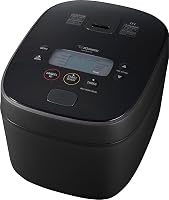
Tiger vs Zojirushi Rice Cooker: Which Is Better? (October 2026)
Choose the Tiger JBV-A10U if you want its Tacook tray for cooking rice and a main dish together; choose the Zojirushi NS-TSC10 for delay timers and extended keep warm. Both hold up to 5.5 cups of uncooked rice.
On this page (8 sections)
- Tiger vs Zojirushi rice cooker: what sets them apart?
- Which cooker gives you more useful cooking options?
- Which one fits your schedule?
- Are both rice cookers the same size?
- Which is easier to clean and store?
- Which should you buy: Tiger JBV-A10U or Zojirushi NS-TSC10?
- What should you check before buying?
- How we scored these rice cookers
Choose the Tiger JBV-A10U if you want its Tacook tray for a second dish, or the Zojirushi NS-TSC10 if delay settings and extended keep warm matter more. This Tiger vs Zojirushi rice cooker comparison comes down to how you plan meals, schedule cooking and use the rice after it finishes.
Both models hold up to 5.5 cups of uncooked rice and use micom controls. The Tiger has 4 automated settings and a tray for cooking vegetables or proteins alongside rice; the Zojirushi adds 2 delay settings and a reheating cycle.
 Best for cooking rice with a side
Tiger JBV-A10U 5.5-Cup Micom Rice Cooker
 Best for timer flexibility
Zojirushi NS-TSC10 5.5-Cup Micom Rice Cooker
Tiger vs Zojirushi rice cooker: what sets them apart?
The Tiger JBV-A10U stands out for its Tacook tray, while the Zojirushi NS-TSC10 offers more scheduling and warming options. Both suit households that want a 5.5-cup uncooked capacity.
The Tiger has settings for plain rice, brown rice, slow cook and steam. Its Tacook tray uses steam to prepare vegetables or proteins at the same time as the rice.
The Zojirushi has automatic and extended keep warm, a reheating cycle and 2 delay time settings. Its Steam menu setting lets it double as a steamer, though a separate synchronized tray isn't specified.
If you want to compare other Tiger models, our best Tiger rice cookers guide covers additional options. For more detail on the JBV-A10U itself, see our Tiger JBV-A10U review.
Which cooker gives you more useful cooking options?
Pick the Tiger JBV-A10U for a tray that cooks a side dish while rice cooks; pick the Zojirushi NS-TSC10 for delay and reheating features. The right set of options depends on what you do most often.
Tiger vs Zojirushi for cooking another dish
The JBV-A10U's Tacook tray is designed for vegetables or proteins. Tiger says the tray's synchronized cooking keeps the cooking plate's flavors from affecting the rice.
That can help when you want rice and a simple steamed side ready together. It doesn't replace a separate pot for dishes that need a different cooking method or more room.
The Zojirushi's Steam menu setting offers another way to steam food. Its listed features don't specify a tray designed for cooking another dish at the same time as rice.
Which has more rice settings?
The JBV-A10U has 4 automated settings: plain rice, brown rice, slow cook and steam. The Zojirushi's available details highlight its fuzzy logic controls and Steam menu, but don't give a matching total for its menu settings.
If you want more choices from Tiger, the JAX-T10U has 10 automated settings, including porridge, mixed rice, multigrain, sweet rice and quick cooking. Its Tacook tray also supports synchronized cooking.
Our Cuckoo CR-0675F vs Tiger JBV-A10U comparison gives you another way to compare the JBV-A10U against a similarly sized cooker. For a broader explanation of basic, micom, induction and pressure models, read types of rice cookers.
Which one fits your schedule?
The Zojirushi is the clearer fit if you want delay settings and a reheating cycle. Choose the Tiger if its automatic keep-warm period covers the time between cooking and serving.
The NS-TSC10 has 2 delay time settings, automatic keep warm, extended keep warm and a reheating cycle. These options can help when you want more flexibility around when rice finishes and how you warm it later.
The JBV-A10U automatically keeps rice warm for up to 12 hours. That gives you a stated time limit to plan around, but it doesn't have delay settings in the available feature details.
The Tiger JAX-T10U is another option if you want Tacook cooking and more preset menus. Its features include 2 preset timers, an LCD screen, and keep warm for up to 12 hours.
Are both rice cookers the same size?
Yes, both have a capacity of up to 5.5 cups of uncooked rice. Tiger says the JBV-A10U can yield about 11 cups cooked from that amount.
The cookers have similar exterior dimensions. The Tiger measures about 13.9 x 10.6 x 8.4 in, while the Zojirushi measures about 14 x 10.13 x 8.5 in, in depth, width and height.
Allow space for the lid to open and for the cooker to sit where you can reach its controls. Check the measurements against your counter before choosing.
Both use 120-volt power. The Zojirushi is rated at 610 watts, while no wattage figure is specified here for the JBV-A10U.
Which is easier to clean and store?
Choose based on the parts and storage details that matter in your kitchen. The Zojirushi has a retractable power cord and clear-coated stainless steel exterior; the JBV-A10U includes a cooking tray and a rice recipe book.
The Zojirushi also has a removable lid and a steaming basket among its special features. Its included components are a rice measuring cup, spatula and spatula holder.
The JBV-A10U comes with a spatula, spatula holder, rice measuring cup, Tacook tray and cookbook. Its inner pot has a fluorine coating and measurement markings.
The listed care instruction for both is hand wash. Check each manual for cleaning steps and which parts you can remove.
Which should you buy: Tiger JBV-A10U or Zojirushi NS-TSC10?
Choose the Tiger JBV-A10U for Tacook synchronized cooking and a simple set of 4 automated settings. Choose the Zojirushi NS-TSC10 for delay settings, extended keep warm and reheating.
Both offer 5.5-cup uncooked capacity, so focus on the features you'll use regularly.
If you mainly want a Tiger with more menu options, consider the JAX-T10U with its 10 automated settings and Tacook tray. Compare all three models in the best Tiger rice cookers guide.
What should you check before buying?
Match the cooker to your usual portions, counter space and routine. The capacity is the same, but their cooking and scheduling features differ.
Think about whether you'll use a tray for vegetables or proteins, set delayed cooking, or reheat rice later. If plain rice is your main goal, don't pay extra for functions you won't use.
For better results across either model, use the supplied measuring cup and follow the rice and water marks in the inner pot. Our guides to rice cooker water ratios and how long rice cookers take can help you plan a batch.
How we scored these rice cookers
Our scores weigh specs and features against what someone comparing Tiger and Zojirushi is likely to need. The JBV-A10U scores 8.4 for its synchronized cooking tray and focused menu; the NS-TSC10 scores 8.7 for its delay, extended keep-warm and reheating options.
The JAX-T10U scores 8.3 as an alternative with more preset choices and a Tacook tray.
Frequently asked questions
Which is better, Tiger or Zojirushi rice cooker?
The Tiger JBV-A10U is the better fit if you want its Tacook tray to steam vegetables or proteins while rice cooks. The Zojirushi NS-TSC10 is a better fit if you want 2 delay settings, extended keep warm and a reheating cycle.
Both have a 5.5-cup uncooked capacity.
Can the Tiger JBV-A10U cook a main dish with rice?
Yes. Its Tacook tray uses steam to cook vegetables or proteins while rice cooks, and the tray is designed so the flavors don't affect the rice.
The cooker has 4 automated settings: plain rice, brown rice, slow cook and steam.
Does the Zojirushi NS-TSC10 have a timer?
Yes. It has 2 delay time settings, plus automatic keep warm, extended keep warm and a reheating cycle.
Check the owner's manual for how to set the timer and for any limits on delay cooking with particular ingredients.
Are both rice cookers large enough for a family?
Both cook up to 5.5 cups of uncooked rice. Tiger says that amount yields about 11 cups cooked.
Consider how much rice you serve at one meal and whether you want leftovers before choosing a capacity.