Zojirushi vs Toshiba Rice Cooker: Which Is Better? (October 2026)
Choose the Zojirushi for small batches, oatmeal and a retractable cord; choose the Toshiba for more cooking modes and a delay timer. Both are 3-cup cookers, but their settings and storage features differ.
On this page (6 sections)
Choose the Zojirushi for small batches, oatmeal and easier storage; choose the Toshiba for more cooking modes and a delay timer. Both are 3-cup rice cookers, so the main difference is how you want to use the cooker beyond basic white rice.
The Zojirushi can cook as little as 1/2 cup of rice or oats and has dedicated settings for steel-cut oatmeal, brown or GABA brown rice, and long-grain white rice. The Toshiba offers 8 cooking functions, including slow cook, cake and egg, plus a delay timer of up to 24 hours.
For a two-person household, batch size may matter more than the total capacity. See our guide to rice cookers for 2 people for more size considerations.

 Best for more cooking modes
Toshiba Mini 3-Cup Fuzzy Logic Rice Cooker
Zojirushi vs Toshiba rice cooker: what is the main difference?
The Zojirushi focuses on small batches and specific rice and oatmeal settings; the Toshiba offers a wider menu of cooking functions. Start with the foods you'll make most often.
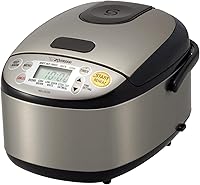
The Zojirushi NS-LGC05 has a 3-cup capacity and cooks as little as 1/2 cup of rice or oats. Its steel-cut oatmeal setting uses a different cooking flow than its regular porridge setting, with a shorter completion time.
The Toshiba Mini also has a 3-cup capacity, measured as uncooked rice. Its 8 functions cover white rice, quick cook, brown rice, mixed grain, slow cook, porridge, cake and egg.
Neither menu is automatically better for every kitchen. A smaller minimum batch can reduce leftovers, while additional functions can be useful if you plan to make foods beyond rice.
Which cooker is better for rice and grains?
Choose the Zojirushi for its dedicated long-grain white rice and GABA brown rice settings; choose the Toshiba for a broad menu of rice and grain types. Match the cooker to the varieties you prepare most.
The Zojirushi has a separate long-grain white setting because long-grain rice cooks differently from short or medium-grain rice. Its brown or GABA brown setting holds the pan at about 104°F for 2 hours as part of brown rice activation.
Toshiba describes its fuzzy logic as sensing moisture and adjusting temperature and cooking time. It lists jasmine, sushi, white, basmati, wild and brown rice, as well as quinoa, oatmeal and mixed grains among the foods the cooker can make.
Those are feature descriptions, not a guarantee that every rice variety will need no adjustment. Use the directions for the rice you buy and the cooker you choose.
Our rice cooker water ratio guide covers how water amounts vary across white, brown and jasmine rice.
How much rice can each cooker make?
Both have a 3-cup capacity, but the Toshiba's capacity is stated as uncooked rice. For the Zojirushi, the useful small-batch detail is that it can cook as little as 1/2 cup.
The Toshiba describes its capacity as 3 cups uncooked, which it says makes 3 to 6 cups cooked. Consider how much cooked rice you can use at a meal and whether you want leftovers.
If you regularly cook less than a full cup, the Zojirushi's stated minimum is a clear fit. If you usually cook several servings or want a cooker for mixed grains, the Toshiba's menu may carry more weight.
What can you cook besides rice?
The Toshiba lists more non-rice modes, while the Zojirushi has a specific steel-cut oatmeal setting. Choose based on the extras you'll actually use.
Toshiba's modes include slow cook, cake and egg, along with white rice, brown rice, mixed grain, quick cook and porridge. Its description also names soups, stews and oatmeal among possible dishes.
The Zojirushi's steel-cut oatmeal menu has a different cooking flow from its regular porridge setting. The brand describes the steel-cut mode as having a shorter completion time.
If oatmeal is a regular breakfast, compare the dedicated Zojirushi setting with the Toshiba's broader menu. For other grains, such as quinoa, this guide to cooking quinoa in a rice cooker explains what to consider before you start.
Which is easier to schedule and store?
The Toshiba has a delay timer up to 24 hours; the Zojirushi has a retractable cord and fold-down handle for moving and storage. Decide whether timing or carrying convenience matters more.
Use the Toshiba's delay timer when you want to schedule cooking in advance. Its keep-warm and reheat function is another convenience for serving rice later.
The Zojirushi's built-in cord retracts, and its handle folds down. Those features help when you need to put the cooker away between uses or move it from a cabinet to a counter.
The Toshiba has a detachable power cord, which you can remove for storage. The cord is not described as retractable, so it won't store in the same way as the Zojirushi's.
Which cooker is easier to clean?
Both have nonstick inner pots and recommend hand washing; the Toshiba also has removable steam parts to clean. Plan to wash the pot gently after each use.
The Toshiba's steam valve and steam vent cap can be removed for cleaning. Its pot should be washed with mild soap and a soft cloth, and it isn't recommended for dishwasher cleaning.
The Zojirushi's care instructions call for hand washing. Avoid assuming that a nonstick surface is dishwasher safe when the recommended care method is hand washing.
For either cooker, clean the parts that collect condensation or food residue according to its instructions. If the issue is rice that turns sticky or mushy, see our guide to why rice cooker rice gets sticky.
Which small cooker should you choose?
Pick the Zojirushi if you cook small amounts, make steel-cut oatmeal or want a retractable cord; pick the Toshiba if you want 8 cooking modes and a 24-hour timer. Both make sense for a small kitchen, but their strengths suit different routines.
The Zojirushi is the more focused choice for small portions and its dedicated rice and oatmeal settings. Its fold-down handle and retractable cord also make it a practical fit when counter or cabinet space is tight.
The Toshiba is the broader choice for households that want to try slow cooking, cake or egg modes in addition to rice. Its delay timer can help fit cooking around a schedule.
For a closer look at the Toshiba on its own, read our Toshiba Mini 3-Cup review. For another brand comparison, see Tiger vs Zojirushi rice cookers.
The scores weigh specs, features and buyer feedback against what you're shopping for.
Frequently asked questions
Is Zojirushi or Toshiba better for a small household?
Both are 3-cup cookers suited to small households, but the Zojirushi can cook as little as 1/2 cup of rice or oats. Choose it when you often make small batches; choose the Toshiba if its 8 cooking functions and delay timer matter more.
Can both cook brown rice?
Yes. Both have a brown rice setting.
The Zojirushi also has a GABA Brown setting that holds the pan around 104°F for 2 hours to activate brown rice, while the Toshiba offers brown rice among its 8 cooking functions.
Which rice cooker has more cooking functions?
The Toshiba has 8 named functions: White Rice, Quick Cook, Brown Rice, Mixed Grain, Slow Cook, Porridge, Cake and Egg. The Zojirushi has dedicated settings for steel-cut oatmeal, brown or GABA brown rice, and long-grain white rice, along with its other rice settings.
Can you set either cooker to start later?
The Toshiba has a delay timer that can schedule cooking up to 24 hours in advance. A delay timer isn't among the Zojirushi features described here, so choose the Toshiba if scheduled cooking is a deciding feature.
Which cooker is easier to move and store?
The Zojirushi has a fold-down handle and a built-in retractable power cord, both designed to make transport and storage easier. The Toshiba has a detachable cord, which you can remove, but it doesn't retract into the cooker.